Kitchen Cabinet Refacing in Boca Raton: Is It Right for Your Home?
Updated: 6 days ago
A dated kitchen does not always need a full demolition. Kitchen cabinet refacing can update the appearance of a home while keeping cabinet boxes that are still solid, level, and practical. For homeowners in Boca Raton and nearby South Florida communities, the right choice depends on the condition of the cabinets, the existing layout, and the improvements the kitchen needs.
What Cabinet Refacing Includes
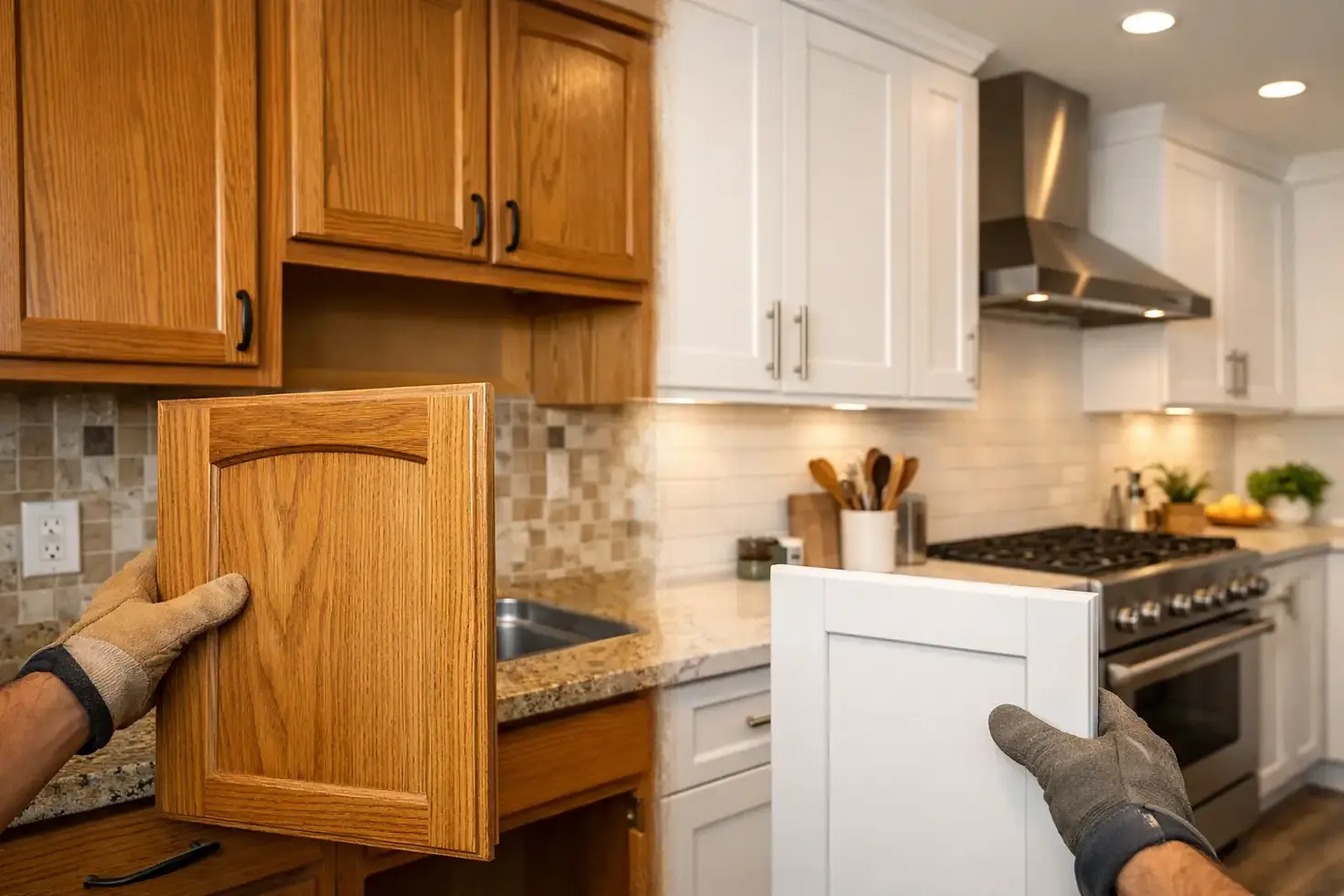
Refacing keeps the main cabinet boxes in place while updating visible surfaces. The project may include new doors, drawer fronts, hinges, hardware, finished end panels, trim, toe kicks, and related details. It is different from simply painting old doors because the visible cabinet surfaces and fronts are replaced or covered with a coordinated finish.
Refacing works best when the current layout provides adequate storage and the cabinet boxes are not seriously damaged. It can create a more consistent look with less disruption than a complete replacement, but it cannot correct every kitchen problem.
When Refacing Makes Sense
Open the doors and drawers and check for swollen areas, soft material, loose joints, sagging shelves, and moisture damage near the sink. Cabinets that are structurally sound and securely installed may be good candidates. The existing footprint should also work for how the household uses the kitchen.
If the project requires moving appliances, changing the island, adding substantial storage, widening walkways, or correcting a poor layout, a broader kitchen remodeling plan may be more appropriate. Refacing should improve the kitchen—not hide problems that need a different solution.
Refacing, Painting, or Replacement?
Painting may be enough when the existing doors have a style the homeowner likes and remain in good condition. Refacing offers more design flexibility through new door styles, finishes, hardware, and trim. Full replacement is usually considered when the boxes have widespread damage or the layout must change significantly.
In South Florida, finish materials should also be selected for regular use, humidity, cleaning, and sunlight. A practical design balances appearance with durability and maintenance.
What the Refacing Process Usually Looks Like
A refacing project typically starts with a careful look at the existing cabinet boxes and accurate measurements of every door, drawer, and exposed side. Once the new door style and finish are selected, the old doors, drawer fronts, and hardware are removed. The exposed cabinet frames and end panels are then covered or finished to match the new fronts, and the new doors, drawer fronts, hinges, and pulls are installed and adjusted.
Because the cabinet boxes and countertops usually stay in place, the kitchen can often remain partly usable during the work. That is one of the main reasons homeowners consider refacing instead of tearing everything out. It is still construction, though, so plan for some dust, noise, and a few days of limited access to cabinets while the work is underway.
Door Styles and Finishes That Work Well
Shaker-style doors remain popular because they suit both traditional and modern homes. Flat slab doors create a clean, contemporary look and are easy to wipe down. In bright South Florida kitchens, finishes should be chosen with sunlight and humidity in mind. Some painted and wood finishes can show wear near the sink or fade in direct sun, while quality laminate and thermofoil options are designed to handle regular cleaning. Ask about how each finish holds up to moisture, heat from appliances, and daily use before choosing.
Hardware is an easy way to change the character of the kitchen. Soft-close hinges and drawer slides can be added during refacing in many cases, which makes the cabinets feel newer every time they are used. Consistent hardware placement across doors and drawers also helps the finished kitchen look intentional.
Signs Refacing Is Not the Right Fit
Refacing is a surface upgrade. If the cabinet boxes are swollen from past leaks, the shelves are sagging, or the cabinets are pulling away from the wall, new doors will not solve the underlying problem. In those cases, replacing the affected cabinets is usually the better investment. Water damage under the sink deserves special attention: the source should be corrected and the area dried before any new finish is installed.
Pairing Refacing With Other Small Updates
Refacing often pairs well with a few targeted updates that keep the project focused. A new tile backsplash, fresh paint on the walls, updated cabinet hardware, and new trim can make the kitchen feel finished without changing the layout. If a new countertop, sink, or faucet is part of the plan, any plumbing connections are handled by a separate licensed plumber if needed, and the cabinet work is scheduled around that step.
Before work begins, walk through the kitchen and decide which items are staying, which are being replaced, and which can wait. A short, clear list helps keep the budget under control and avoids small surprises during installation.
Plan the Details Before Work Begins
Door style, finish, hardware, backsplash, lighting, flooring, and countertop transitions should be considered together. A coordinated plan helps the kitchen feel intentional instead of like a collection of unrelated updates. Accurate measurements and a clear scope also reduce surprises during installation.
Balan Construction helps homeowners in Boca Raton and the approved South Florida service area plan cabinet updates, backsplash, flooring, tile, and related residential improvements. Contact Balan Construction to discuss whether cabinet refacing or cabinet replacement is the better fit for your home.
Planning a project in Boca Raton? Call or text Balan Construction at (561) 288-6632 or request a free estimate at https://www.balanconstruction.com.


Comments