Can Tile Be Repaired? When a Fix Makes Sense
Updated: 6 days ago
A single cracked floor tile can make an otherwise well-kept bathroom or kitchen feel unfinished. It also raises a reasonable question: can tile be repaired, or does one damaged piece mean a larger replacement project? In many cases, individual tiles can be replaced successfully. The real decision is whether the damage is limited to the tile itself or points to a problem underneath it.
For homeowners in Boca Raton and nearby South Florida communities, that distinction matters. Humidity, water exposure, shifting materials, and heavy use can all affect tiled floors, backsplashes, and showers. A clean repair can restore the surface and prevent a small issue from becoming a more expensive one, but only when the underlying cause is addressed.
Can Tile Be Repaired Without Replacing Everything?
Yes, often. A loose, chipped, stained, or cracked tile can usually be removed and replaced without tearing out the surrounding installation. This is most straightforward when you have matching spare tiles from the original project. A qualified installer can carefully remove the damaged piece, prepare the setting bed, install the replacement, and refresh the grout around it.
A repair is most likely to make sense when the surrounding tiles are secure, grout joints are generally sound, and there are no signs of moisture below the surface. One dropped pan that chips a kitchen tile is very different from several hollow-sounding tiles across a bathroom floor.
The challenge is that tile is only the visible finish layer. Beneath it may be thinset mortar, a waterproofing system, backer board, subflooring, or a shower pan. If movement or water has compromised those materials, replacing one tile may improve the appearance temporarily without solving the actual problem.
Damage That Usually Has a Practical Repair
Small chips and edge damage can sometimes be repaired with color-matched epoxy or a porcelain repair compound. This option works best for minor damage in a low-visibility area. The repaired spot may still be noticeable up close, especially on glossy tile or a tile with a strong pattern, but it can be a sensible short-term solution.
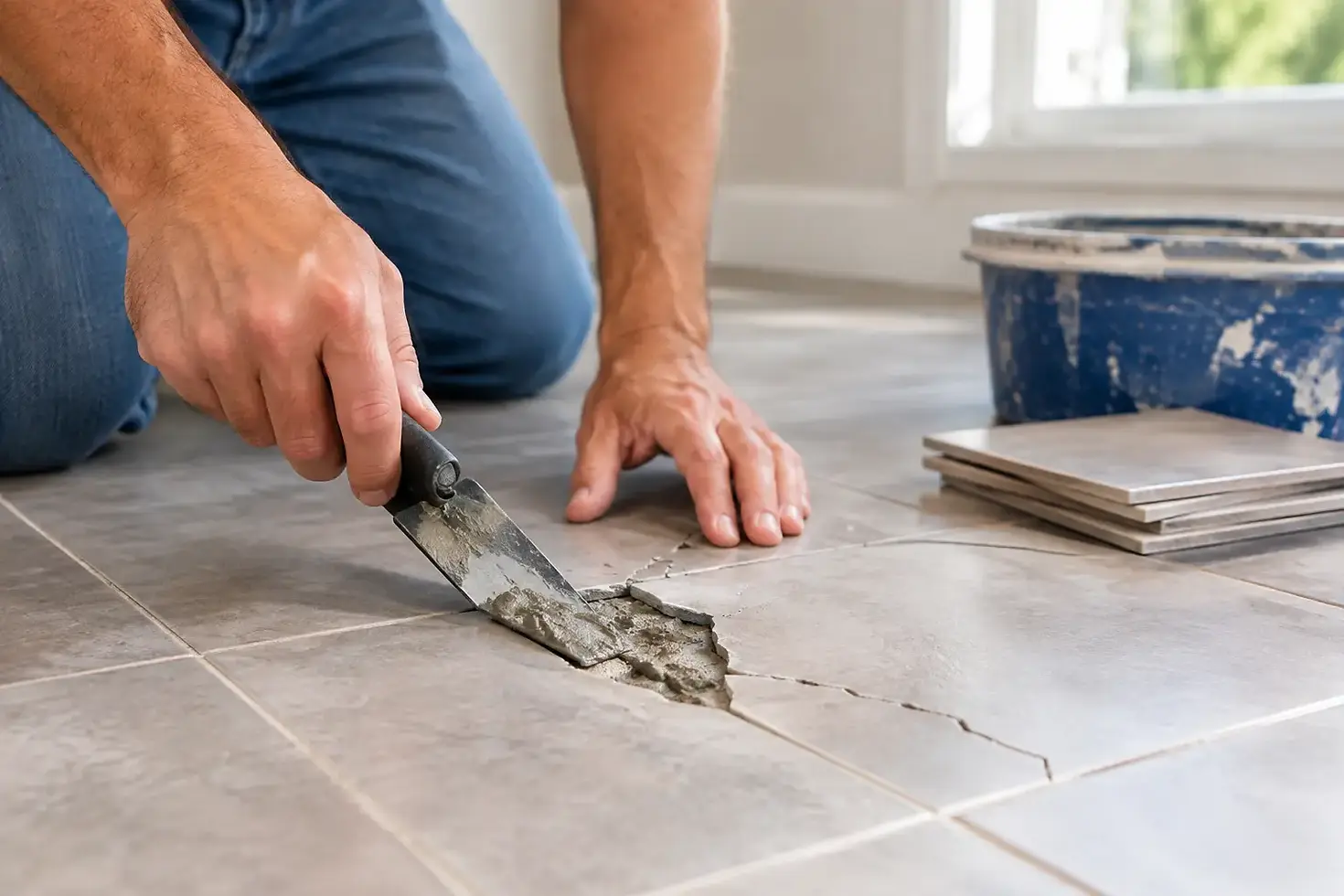
A single cracked tile can often be replaced. Cracks caused by an impact are usually isolated, particularly if nearby grout lines and tiles remain intact. The installer needs to remove the broken tile without damaging the surrounding pieces, which takes patience and the right tools.
Loose tiles may also be repairable if the problem is limited to a small area and the substrate below remains dry and stable. A tile that sounds hollow is not always an emergency, but it deserves attention. Hollow spots can mean incomplete mortar coverage or a bond that has failed over time. Leaving them alone increases the chance of cracking or loosening later.
Discolored or crumbling grout is another repair that can make a major visual difference. Grout can be cleaned, repaired in isolated spots, or removed and replaced. In wet locations, however, grout repair should not be mistaken for waterproofing. Grout is not designed to stop water from reaching the materials behind it.
When Replacing One Tile Is Not Enough
Multiple cracked tiles, repeated grout cracks, or tiles that loosen in several areas usually indicate movement beneath the installation. On a floor, that may be caused by a subfloor issue, improper preparation, or a lack of movement joints. On walls and shower surfaces, it may relate to water intrusion, settling, or a failed installation system.
A shower deserves special caution. If tiles are loose, grout is deteriorating, or water stains appear on an adjoining wall or ceiling, the concern may extend beyond the tile. Moisture can damage drywall, backer board, framing, and the shower's waterproofing layer. Replacing a few face tiles without evaluating the wall behind them can hide the symptoms while moisture continues to cause damage.
Tile that is tenting or lifting off the floor should also be evaluated promptly. Tenting occurs when tiles push upward, sometimes with a sharp ridge or a row of tiles that suddenly breaks loose. It can result from expansion, poor perimeter spacing, substrate movement, or bond failure. This is not a cosmetic patch situation. The affected area needs to be assessed before anyone tries to press the tiles back into place.
How to Tell What Caused the Damage
The pattern of damage provides useful clues. A single chip or crack centered in one tile often suggests impact. A crack that runs through several tiles or follows a grout line is more likely related to movement below the tile.
Look for changes around the damaged spot. Are nearby grout joints splitting? Do other tiles sound hollow when tapped gently with a coin? Is there soft flooring, staining, musty odor, or peeling paint on the other side of a shower wall? Those signs do not confirm the cause on their own, but they are reasons to avoid a quick cosmetic repair.
In South Florida homes, moisture should always be part of the conversation, especially in bathrooms, laundry rooms, entryways, and areas near exterior doors. Water can enter through failed caulk, damaged grout, plumbing leaks, or poorly sealed transitions. A professional inspection helps separate a simple tile replacement from a repair that needs work below the surface.
Matching Tile Is Often the Hardest Part
The physical replacement of one tile may be relatively simple. Finding a convincing match is often harder. Tile lines are discontinued regularly, and even the same product can vary slightly between manufacturing batches. Color, texture, size, and sheen all matter.
If you have leftover tile, keep it. Store it in a dry, labeled location along with any information you have about the product. A few extra pieces can save significant time when a future repair is needed.
Without spare tile, a repair professional may be able to locate a close match, pull a replacement tile from a less visible area, or create a planned accent detail that makes the change look intentional. There is no universal answer. In a small powder room, a close match may be perfectly acceptable. In a large, continuous floor with strong natural variation, replacing a larger section may produce a better result.
What a Proper Tile Repair Should Include
A durable repair is more than setting a new tile into an empty space. The damaged tile must be removed carefully so adjacent pieces are not chipped or loosened. Old mortar needs to be cleared to create enough room for the replacement tile to sit level with the surrounding surface.
The installer should then inspect the exposed area. If the substrate is cracked, damp, weak, or uneven, it needs to be addressed before new tile goes in. The replacement is installed with appropriate mortar coverage, allowed to cure, grouted, and finished with flexible caulk where tile meets a tub, shower pan, countertop, or wall transition.
Clean workmanship matters here. Tile repair can create dust and sharp debris, particularly when grout is cut out or a damaged porcelain tile is broken apart. A careful crew protects nearby finishes, contains debris, and leaves the space ready to use once materials have cured.
Repair or Replacement: A Practical Decision
Choose a targeted repair when the problem is isolated, matching tile is available or acceptable, and the surface below is stable. Consider a larger replacement when damage appears in multiple areas, water has affected the installation, or the existing tile is near the end of its useful life.
Cost matters, but so does avoiding repeat work. A low-cost patch that has to be redone after a few months is rarely the best value. For a bathroom or custom shower, it is usually worth taking the time to understand whether the visible tile damage is only the surface of a larger issue.
Balan Construction can help homeowners evaluate damaged tile as part of a practical home repair, bathroom update, or larger remodeling plan. The right next step is not always a full replacement, but it should be a repair that addresses the condition of the materials behind the tile as well as the tile you can see.
If a tile is cracked, loose, or showing signs of moisture nearby, take a few clear photos and note when you first noticed the problem. That small amount of information can make it easier to decide whether a careful repair is enough or whether the area needs a closer look.
Planning a project in Boca Raton? Call or text Balan Construction at (561) 288-6632 or request a free estimate at https://www.balanconstruction.com.


Comments